Students use simple materials - rulers and marbles - to explore the conservation of momentum.
Each pair of students will need 2 rulers - make sure the rulers are of the variety that have a groove down the middle.
Students set up a simple ramp by placing one end of one ruler on a textbook. The second ruler is placed at the end of the ramp ruler, taking care to line up the center grooves. You can use a small piece of tape to keep the rulers in place.
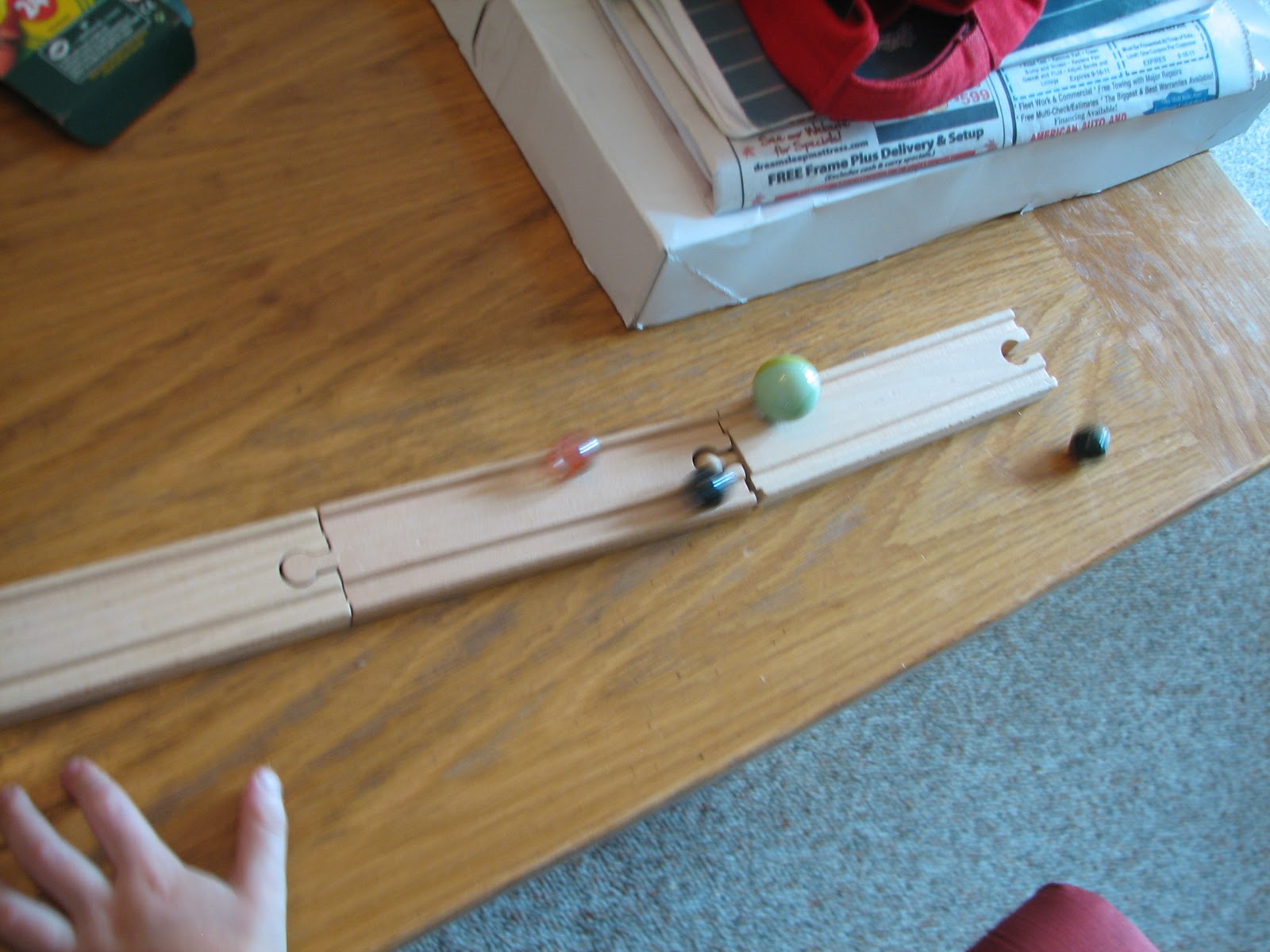
A marble is placed where the two rulers meet. A second marble, the same size as the first, is held near the top of the ramp. The marble on the ramp is released and students observe what happens to both the first marble and the second marble.
Students record how far each marble traveled after the collision (this may necessitate some additional rulers or meter sticks).
This first round may require several trials, to find the optimum spot for releasing the marble. After that spot is determined, the marble should always be released from that same spot.
After getting a feel for what happens with 2 marbles of the same size, the experimentation begins.
If you have larger and smaller marbles available, students can try various combinations of the marbles:
--a regular marble hitting a large marble
--a large marble hitting a regular marble
--a small marble hitting a regular marble
--a regular marble hitting a small marble
--a large marble hitting a small marble
--a small marble hitting a large marble
If all your marbles are of the same size, use multiple marbles:
--one marble hitting two marbles
--two marbles hitting one marble




 Posts
Posts


